How Video Game Storyline Concept Icons Enhance Game Design and Creative Workflows
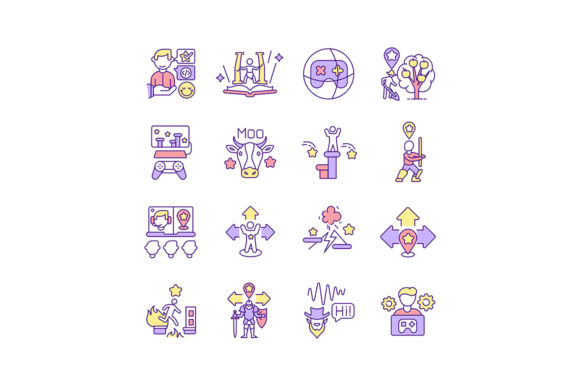
Video game development is a complex, multidisciplinary process that requires careful planning, visual communication, and iterative refinement. One of the tools that has gained traction among designers, creative professionals, and project managers is the Video Game Storyline Concept Icon. These icons serve as visual shorthand for narrative elements, character arcs, and key plot points in the early and ongoing stages of game design.
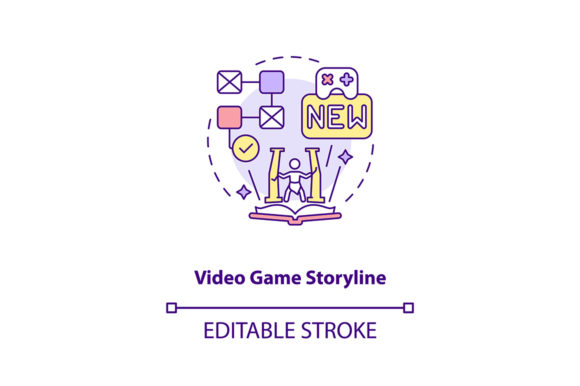
Unlike general-purpose design assets, a Video Game Storyline Concept Icon is specifically tailored to represent story-driven components in a game’s development pipeline. These icons are often used to map out narrative structures, communicate ideas across teams, and maintain visual consistency in storyboarding and documentation. Their vector-based format allows for flexibility in editing and integration across various platforms and tools used in game development and content planning.
Using Video Game Storyline Concept Icons Across the Development Lifecycle
These icons are not limited to a single phase of development. Instead, they can be integrated throughout the creative process—before, during, and after key project milestones. Here's how they can be applied effectively at different stages:
Pre-Development: Laying the Narrative Foundation
In the early planning phase, story concepts are often abstract and fluid. A Video Game Storyline Concept Icon provides a visual anchor for ideas that may otherwise remain difficult to articulate. Whether you're outlining a protagonist's moral dilemma or a pivotal turning point in the game world, these icons help clarify and communicate the core narrative beats.
For example, a designer can use a thin-line illustration of a character silhouette to represent a protagonist's evolving journey, or a broken chain icon to symbolize a moment of liberation or betrayal. These visuals can be embedded in mood boards, pitch decks, or concept documents to enhance clarity and engagement.
During Development: Supporting Consistent Storytelling
As the game moves into active development, maintaining narrative consistency becomes crucial. A set of standardized icons can act as reference points for writers, artists, and level designers. When integrated into task management tools like Trello, Asana, or Jira, these icons make it easier to track narrative threads across different departments and deliverables.
Imagine a sprint planning session where each user story is tagged with a relevant storyline icon. This not only reinforces the thematic context of each task but also ensures that all team members—whether they're working on dialogue, environment design, or gameplay mechanics—remain aligned with the overarching narrative arc.
Post-Release: Analyzing and Iterating on Story Elements
Once the game is live, developers and marketers can use the same iconography to analyze player engagement with specific story beats. These icons can be repurposed in post-mortem reports, marketing materials, or even community updates to visually highlight key narrative moments that resonated with players.
Integration with Tools and Workflows
The flexibility of the Video Game Storyline Concept Icon makes it compatible with a wide range of digital tools and collaborative environments. Since the icons are available in multiple formats (EPS, JPG, PNG, SVG, AI), they can be easily imported into:
- Graphic design software like Adobe Illustrator or Figma
- Project management platforms such as Notion, ClickUp, or Monday.com
- Game engines like Unity or Unreal Engine for visual scripting and asset tagging
- Documentation tools like Confluence or Google Docs
Each format supports different use cases. For instance, SVG files are ideal for scalable web use, while AI and EPS files allow for detailed editing in vector environments. The editable stroke feature adds another layer of customization, enabling designers to adjust line weight or color to match brand guidelines or visual themes.
Practical Tips for Implementation
Successfully integrating Video Game Storyline Concept Icons into your workflow requires more than just downloading and placing them in a document. Here are several practical strategies to maximize their impact:
- Create a visual language: Establish a consistent naming and tagging system for your icons so that anyone on the team can quickly interpret their meaning.
- Pair with narrative frameworks: Use these icons alongside story structures like the Hero’s Journey, Three-Act Structure, or branching narrative models to reinforce clarity.
- Customize for context: Modify the icons using their editable stroke feature to align with your project’s visual tone—whether it’s dark and gritty or bright and whimsical.
- Embed in documentation: Include icons in design documents, style guides, and character sheets to provide visual cues that aid comprehension.
- Use in presentations: Pitching a new story arc or character development path? Visual icons help stakeholders grasp complex narrative elements more quickly than text alone.
Ensuring Quality and Long-Term Usability
Like any design asset, the effectiveness of Video Game Storyline Concept Icons depends on how well they are managed and maintained over time. Here are some best practices to ensure they remain a valuable part of your toolkit:
- Organize your library: Store icons in a centralized, searchable asset management system with clear metadata for easy retrieval.
- Version control: If you make edits or variations, track them using versioning to avoid confusion across teams or projects.
- Update as needed: As your game’s narrative evolves, revisit and update your icon set to reflect changes in character arcs, plot structure, or world-building elements.
- Maintain consistency: Use a unified visual style across all icons to avoid jarring inconsistencies that could distract from their intended purpose.
Real-World Applications Beyond Game Design
While the Video Game Storyline Concept Icon was developed with game creators in mind, its utility extends to a variety of creative and professional fields. Writers can use them to outline character motivations, educators might integrate them into storytelling curricula, and marketers can visualize brand narratives in campaign planning.
For example, a freelance writer working on a novel might use these icons to map out chapters and character arcs visually. A UX designer planning a narrative-driven app experience could use them to illustrate key user interactions tied to story progression. Even entrepreneurs pitching a startup idea can benefit from using narrative icons to convey the emotional journey of their product’s users.
Conclusion
The Video Game Storyline Concept Icon is more than a design asset—it’s a strategic tool that bridges the gap between abstract ideas and actionable development. By providing a visual framework for storytelling, it enhances communication, supports narrative consistency, and integrates seamlessly into modern creative workflows.
Whether you're a solo developer, part of a large studio, or someone working outside the gaming industry, these icons offer a flexible, scalable way to visualize and manage the story-driven elements of your projects. With the right approach to implementation and maintenance, they can become a foundational part of your creative toolkit for years to come.