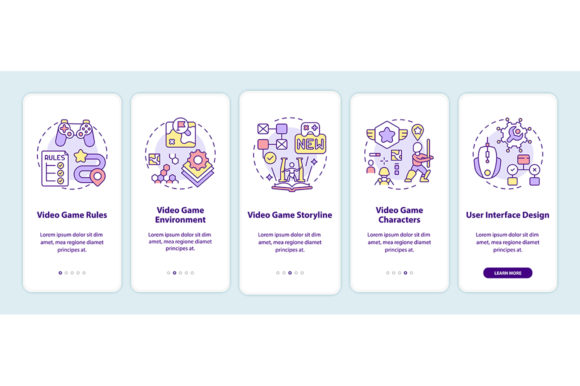
Video Game Design Components App Pages: A Practical Resource for UI Development
Understanding the Core Offering
Video Game Design Components App Pages is a UI vector template collection tailored for mobile app designers and game developers. It includes a comprehensive set of visual assets in multiple formats—EPS, JPG, PNG, SVG, and AI—making it adaptable for various design workflows. The package is particularly notable for its RGB color illustrations and structured walkthroughs that guide users through essential design concepts.
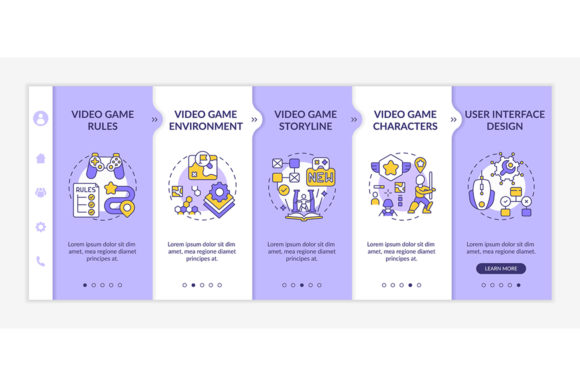
This resource stands out for its focus on practical implementation. It's not just a design kit; it's a framework for building consistent, visually engaging mobile interfaces, especially for applications related to game design or interactive media. The inclusion of a 5-step walkthrough for video game rules demonstrates how the components can be used to explain complex systems in a digestible format.
Design Quality and Visual Consistency
The visual assets included in Video Game Design Components App Pages maintain a high level of polish and stylistic consistency. The RGB illustrations are vibrant without being overwhelming, and they scale well across different screen sizes. This is crucial for mobile app developers who need to ensure visual fidelity across a wide range of devices.
Each component is thoughtfully designed with usability in mind. Buttons, icons, and navigation elements are clearly distinguishable and follow modern design conventions. This reduces the learning curve for developers and designers who may be integrating these components into existing or new projects.
Usability and Real-World Application
One of the most valuable aspects of Video Game Design Components App Pages is its usability in real-world scenarios. The package includes a walkthrough graphic that simplifies the presentation of complex game rules into five digestible steps. This is particularly useful for onboarding screens in mobile games or educational apps where clarity and user retention are key.
For example, a mobile game startup looking to launch a new puzzle app could use these components to quickly prototype the game's tutorial sequence. The structured visual flow ensures that users understand the core mechanics without confusion, improving the overall user experience and reducing support queries.
Flexibility Across Design Tools
The inclusion of multiple file formats—especially SVG and AI—makes Video Game Design Components App Pages highly adaptable. Designers using Adobe Illustrator can work with the native AI files, while web developers may prefer SVG for its scalability and compatibility with modern web standards. The availability of PNG and JPG files ensures that the components can be used even in environments where vector editing is not possible.
This flexibility supports a wide range of use cases, from early-stage wireframing to final production assets. It also allows for easy customization, enabling teams to adapt the components to match their brand identity without needing to redesign from scratch.
Reliability and Long-Term Value
As a packaged resource, Video Game Design Components App Pages offers long-term value through its reliability and reusability. The components are built with a consistent design language, which reduces the risk of visual fragmentation as the app evolves over time. This is especially important for apps that undergo frequent updates or feature expansions.
For freelance designers or small development studios, having a dependable UI kit can significantly reduce production time and costs. The ability to reuse and repurpose these components across multiple projects enhances their return on investment, making them a valuable asset for professionals who work on tight deadlines or limited budgets.
Who Benefits Most from This Resource?
Professionals who will benefit most from Video Game Design Components App Pages include UI/UX designers, indie game developers, mobile app entrepreneurs, and digital educators. It is particularly well-suited for those who need to create polished, intuitive interfaces quickly without compromising on visual quality.
- UI/UX designers can use the components to streamline their workflow and maintain visual consistency across app screens.
- Game developers will appreciate the rule-based walkthrough templates that simplify the explanation of gameplay mechanics.
- Freelancers and small teams can reduce design overhead by leveraging pre-built, customizable assets.
- Educators and app publishers may find the structured visual guides useful for creating interactive learning materials or tutorial-based apps.
Potential Limitations and Considerations
While Video Game Design Components App Pages offers many strengths, it’s important to consider potential limitations. The design style, while modern and clean, may not suit every brand or application. Customization may be necessary to align with specific visual identities or niche markets. Additionally, while the components are well-documented, they assume a baseline understanding of UI design principles and vector editing tools.
For those without design experience, some elements may require additional learning or collaboration with a professional designer to achieve optimal results. However, for those with even a moderate level of design proficiency, the included walkthroughs and structured layouts significantly lower the entry barrier.
Final Thoughts on Practical Implementation
Incorporating Video Game Design Components App Pages into a development workflow can lead to more efficient design cycles and a more cohesive user experience. Its combination of high-quality visuals, structured guidance, and flexible file formats makes it a strong candidate for professionals seeking to accelerate their app development process without sacrificing quality.
Whether you're building a mobile game, an educational app, or a digital product with complex user interactions, this resource offers a solid foundation. It's particularly valuable for those who need to deliver polished, functional interfaces under time constraints—providing both immediate utility and long-term design stability.